Friday, December 18, 2015

Canines and Cavities

This week I took my 11 year old kitty to the vet because her breath was becoming foul and I figured it was time for a check up and cleaning. I put her on the exam table and after a few seconds of examining her mouth my vet simply stated that yes, she needed a cleaning and at least one tooth extracted. I am always curious about animal health and eager to learn so I asked how he could possibly tell she needed an extraction in such a brief glance of her mouth? He told me she has a 'resorptive lesion' on an upper tooth and that meant it would need to be removed, so of course I wanted to see what he saw so he opened her mouth and pointed out the tooth in question and right away I saw it, a dark red spot on the bottom of her tooth that started at the gum line. Once I knew what it was I understood how he found it so quickly and next week she is going in for a cleaning and removal.
Thanks to the internet I have done some more research and have found that, although quite common in cats, resorptive lesions can also be found in canines as well. There isn't really a clear answer as to why these happen, some say it's genetic, others say bacteria, and others say diet so I'm thinking it can be a mix of all of the above. Symptoms of these lesions include inflammation, tooth decay, destruction of tooth enamel, pain and tooth loss.


Dental health is an important part in your pet's life so be sure to have their teeth examined and cleaned on a regular basis. If you see any odd markings, colors, or spots on your pets teeth be sure to consult your veterinarian. Bad breath can also be a sign of an oral health issue so don't be shy about asking your vet questions if you have any concerns.


Friday, December 11, 2015

Puppies and Holidays, Tips to Keep Everyone Safe.

It's December 11th and even though yesterday was a sunny 55 degrees in Wisconsin, Christmas is just around the corner which means holidays parties, lots of guests, lots of travel, and questions about how to handle it with your pets. I have put together a pile of tips and recommendations to help you get through it all.

Giving Puppies as a Gift

Every year the holiday season is very busy for us, who doesn't love the idea of putting a puppy beneath the tree and making the kids scream with delight when they realize Santa has made their dreams come true? It's a great idea but one that should involve a lot of planning and consideration before you actually do it. Unlike toys, a puppy cannot be something that is loved for the moment and then pushed aside after the holidays are over and life goes back to normal. Please remember that a puppy is a lifetime commitment and if you are not ready to deal with that then perhaps think of a better idea to make that Christmas morning fabulous for the kids.
If you have decided that you want a puppy for Christmas take your busy holiday schedule into mind. I've had lots of people want to get their puppies on Christmas Eve or Christmas morning but then they think about all of the traveling they have to do and all of the people that will be over and realize that maybe it isn't such a good idea. If you don't have a lot to do and you can dedicate yourself to the puppy then getting it right on the holiday may work out fine, just consider how busy you are and how much time you will need to give to your new family member. Also be aware that you should limit how much exposure a new puppy has to new people as their immune systems are not fully developed, they are not fully vaccinated, and lots of exposure to people could result in sickness and unwanted stress for them.
In the past we have had people want puppies for Christmas but have decided it's better to wait to get them until after the actual holiday activities are over so I have sent them pictures as the puppy has grown and they usually print them out and wrap them up for under the tree. I've also had families purchase items like leashes, collars, toys and other puppy supplies that they have also wrapped and put under the tree for the kids to open and realize that a puppy is in their future. We do also offer gift certificates which you can also wrap and are great for someone who maybe wants a puppy, but isn't quite ready at that exact moment.
Another thing to consider is the weather. Here in Wisconsin it gets nasty and cold in December, the 55 degrees we had yesterday is unheard of and it currently feels like Spring, but we generally have below zero temperatures with tons of snow. I've had families from other states be very adamant about wanting their puppies on certain dates for Christmas but if a puppy has to be shipped I have to comply with airline rules and regulations about shipping them and if it's too cold they can't leave. If you want your puppy shipped on December 24th and there's a major snowstorm I can't control the weather, I can't control a flight getting delayed, and I also will not put a puppy on a flight if I do not feel safe about it. Generally I ask families to plan on getting their puppies shipped a few days before the holidays so that we can deal with any weather delays, this often requires them to find a babysitter for the puppy as they do not want to bring them home and ruin the surprise, that's also something else to consider, do you have someone you can depend on to puppysit?
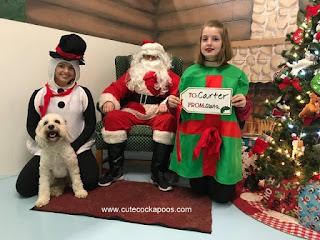

Puppies and Christmas Trees

If you have a puppy you will need to take their curiosity and chewing into consideration when decorating your house for Christmas. On top of having puppies in the house we also have cats and one in particular is an adult that likes to chew, one year he decided to chew apart the wiring on our pre-lit Christmas tree, luckily it wasn't plugged in and that was the end of the tree.
Puppies turn everything into toys, and depending on their age, they often like to put everything into their mouths and chew on it. Tree branches will of course look like heaven to a teething puppy, ornaments are shiny and move, lights blink, and the entire thing looks like a wonderful fort to run underneath, around, and perhaps straight into! To make the tree safer we actually put it up on a coffee table so that it is too high for anyone to reach, I realize that not everyone is willing to do this, so avoid putting decorations, garland, or tinsel on the lower branches that can be reached. I would also avoid putting lights on any areas that can be reached to avoid chewing and electrical shock or potential fires. I would also avoid putting anything edible on the tree like popcorn or berries as the smell may make it even more tempting for the puppy and some berries may be toxic.
If you just don't trust having your puppy near the tree you can consider putting it up higher like we do with the coffee table or perhaps fence the tree off with a few exercise pens, or if possible put a baby gate up to prevent the puppy from entering the room that the tree is in when they are left unattended. I have also read about something called Sticky Paws which is a sheet of double sided tape that you can put on the floor around the tree as animals do not like to walk on sticky products.


Electrical Shock

Puppies chewing on Christmas lights can lead to electrical shock so my best advice is that you do not allow your pet near the tree unattended and to be sure and unplug the lights when you are not near the tree or supervising your pets. Symptoms of electrical shock aren't always obvious and don't appear immediately, injuries can also vary based on the voltage and the path of the current through the body. The most obvious sign of electrical shock is a burn mark at the point of contact. If your puppy was chewing on Christmas lights and got shocked they may have a burn strip across their mouth or tongue. If you suspect your puppy has been shocked it is very important that they be seen by a vet as soon as possible.
 Lots of medical issues can arise during the holidays so be sure and ask your vet what their holiday hours are and who you can contact in case of an emergency. It is a good idea to have names and phone #'s written down in advance so you are prepared. My vet's office is not open during Christmas but we have an Emergency Clinic that is located about an hour away that is always available and I have their contact information written down in case I need to call them. Emergency Clinics generally are very expensive so it's also a good idea to have some extra money set aside to cover unexpected expenses.

Dangerous Holiday Plants

Lots of people like to decorate for the holidays with plants and flowers, my best advice is to keep them high up and out of reach of your pets. Here is some information on common holiday plants:

Poinsettia- I was always told as a kid that these were highly toxic to animals so I have never had one in my house. Apparently this is an urban legend and Poinsettia's are now said to be mildly toxic and can cause nausea or vomiting, still not something I would choose to deal with.

Lillies, Daffodils, and Amaryllis- These are very common for Christmas and bulb kits have become a popular gift idea, we got one for my Mother in Law and she loved it. All of these flowers are very toxic to cats and Daffodils are very toxic to both cats and dogs, especially the bulb which would be so tempting for a puppy to chew on. Eating/chewing on these plants can cause symptoms of gastrointestinal upset, cardiac arrhythmias, kidney failure, convulsions and even death.

Mistletoe and Holly- Both of these plants along with their berries are more toxic than the Poinsettia. Mistletoe contains several substances that are toxic to both dogs and cats that can cause diarrhea, sudden drop in blood pressure, breathing problems and hallucinations.

Christmas Trees- Christmas trees are considered to be mildly toxic to both cats and dogs. The fir tree oils can be irritating to their mouth and stomach which can cause excessive drooling or vomiting. Those sharp tree needles are not easily digested and can possibly cause intestinal irritation, vomiting, gastrointestinal obstruction or puncture.

Christmas Cactus- You're safe with these, they are non toxic to both dogs and cats but I still suggest keeping all plants out of the reach of your animals.

I do suggest that you have a phone number available for all veterinary clinics that will be open for emergencies during the holiday season.

Poisonous People Foods

Most people have parties during the holidays and not all of your guests may realize that your dog is not allowed to have 'people food' and may decide to slip them a treat or two when no one is looking. You may want to consider having your pet contained while you are eating or to discuss with your guests before hand that people food is off limits to your pets. My family dogs are like vacuum cleaners during dinners, you can always find them under the dinner table waiting to snatch up any scrap that may fall to the floor. Here are a few foods to either avoid having available during parties or to warn your guests about:

Chocolate-  We all know there will be Chocolate overload everywhere during the holidays so please be careful! Chocolate contains theobromine, a stimulant that puts dogs into heart stopping overdrive that can cause death. It also contains caffeine and we all know a puppy doesn't need any extra energy!

Xylitol- This is an artificial sweetener that can cause liver failure. This Summer I read a lot of articles about it being found in peanut butter which is commonly used as a treat for pets so please be sure to read your labels and do not feed this to your pets!

Avocado- This contains Persin which can cause vomiting and diarrhea.

Grapes and Raisins- These can cause kidney failure in dogs

Macadamia Nuts- According to the ASPCA Poison Control they can cause weakness, depression, vomiting, tremors and hypothermia in dogs within about 12 hours of eating them.

Cooked Chicken and Pork Bones- Cooked bones can splinter and cause holes in the intestinal track, ham bones can break teeth. I suggest avoiding rawhide bones as well because they too can splinter. Stick with natural chew products like pig ears, bully sticks, hooves, and horns.

Alcohol- Some holiday foods and candies contain alcohol and some guests can leave cups unattended and at easy reach for your puppy. Alcohol can cause vomiting, diarrhea, decreased coordination, central nervous system depression, difficulty breathing, tremors, abnormal blood acidity, coma and even death.


Please have a safe and happy Holiday Season, and please have your vet's contact information available just in case of an emergency.



Tuesday, May 5, 2015

Toy and Food Aggression in Dogs- A.K.A. Resource Guarding

I have had people ask me if it is normal for their dogs to become possessive over food and toys, and yes it is to a point, but it can become a problem if the dog is allowed to get away with too much which prompted me to post this article that I found online. One thing with Cockapoos that people need to be aware of is that they are smart, super smart, and that leads to some easy training but can also lead to some bad habits if their owner does not properly guide them or lets them get away with too much bad behavior, especially at an early age:

Dog Resource Guarding
by Andrea Arden

Resource guarding can be described as the propensity of some dogs to maintain possession of or guard particular things. These can include, but are not limited to food bowls, toys, territory, and people. Dogs displaying guarding issues will often freeze, growl or snap when approached, when you attempt to take an item away, or while being touched. In the worst case scenario a dog may go beyond these warning signals and actually bite.
Guarding things they consider valuable is a very normal, natural and necessary part of dog behavior. After all, survival is often based on being able to successfully get and hold onto things such as food. People guard resources as well, including houses, cars, and jewelry. However, for a dog to live safely and happily in a home he or she needs to clearly understand that guarding from people is not only unnecessary but also inappropriate.
Some dogs seem to have a stronger genetically based propensity towards resource guarding than others. But, as with most behavior issues, it is usually a bit of nature and nurture that plays a part. Some dogs guarding issues also seem to stem from the simple fact that they have been allowed by their people (albeit inadvertently) to guard things. For example, a young pup who is allowed to consistently grab things and run off to the corner to chew on them may well come to think that doing so is his or her right and if someone tries to take something back a battle of teeth on hands may ensue.
We all love our dogs so much that we usually give them just about everything they want in life for free. They can jump on us or the couch for attention, they have a basket of toys at their disposal, we serve them meals and water even if they jump madly about barking at us. In some of these cases a dog who is temperamentally inclined and is allowed to be pushy may make for a dog who basically takes control of what he or she wants in the home.

So, it is important to be careful not to 'kill with kindness.' That is, not to indulge your dog to point where you allow a potentially serious behavior issue to develop. Any dog will be even that much more loveable when they have a clear understanding not to guard resources from people.
As with any behavior problem, it is always easier and safer to focus on prevention rather than cure. If your dog is already presenting signs of having a resource guarding issue it is advisable to seek the assistance of an experienced, reward based trainer to help you in person.
In order to prevent resource guarding issues we need to condition our dogs to not only tolerate, but actually like something that doesn't necessarily come naturally to a dog. In this case, to respond promptly when we request them to give up objects.
Management - Management is a way of preventing problems from being practiced but also a way to help your dog understand that you control a valuable resource, i.e. his access to you and your home. Management is something we practice everyday in many ways with our dogs, including in the form of walking them on leash to keep them safe. When working on preventing behavior issues, management should be used intensely at first and then may gradually decrease depending on your dog's progress. For example, once you feel confident your dog is happily releasing things when you ask him or her to, you may choose not to use on leash supervision anymore (assuming your dog is housetrained and doesn't have other behavior issues you are also trying to prevent or resolve).
1. On Leash Supervision: When you are home and can supervise your dog keep him or her on a leash tethered nearby or while you hold it or step on it. This way you have a gentle and effective means of maintaining control. For example, if your dog is off leash and grabs something inappropriate to chew on you would have to chase after him or her to get it back. This scenario is likely to reinforce many inappropriate behaviors including playing keep away from you and guarding.
2. Short Term Confinement: When you can't your dog let him or her rest quietly in a crate, exercise pen or pet safe room.
3. Controlling Resources- Perhaps the most important part of any training protocol, controlling the things your dog wants in life is the first step in getting him or her to understand why paying attention to you and figuring out what you want is important. A dog that gets everything he or she wants in life for free is likely to have a hard time understanding why you (and listening to you) are valuable. Doggie resources are:
-Food
-Toys
-Attention
-Life Rewards (anything else you can think of your dog wants such as walking out the front door, being allowed to play with other dogs, sitting on the couch, etc.).
Get control of all of these things by not allowing your dog free, unlimited access to them and use training skills such as sit, down, come, etc. as a way to show your dog how to earn what he or she wants. That is, ask him or her to sit before getting a tummy rub, to hand target before getting dinner, to shake before going out for a walk, etc.

Training - Once you have focused on developing good management skills as outlined above you are ready to move on to working on specific anti-resource guarding exercises as a preventative.
1. Chew Toy and Bone Sharing - With your dog on a leash present a chew toy. Offer the chew toy to your dog to investigate and chew on for a moment while you hold one end. After a few moments, take it away and offer your dog a tiny, tasty treat from your other hand. As you progress with this game you can let go of the chew toy and gradually allow your dog to chew on it for longer before you take it away and give a treat. This is a simple, but wonderful interactive game for you and your dog. By continually taking objects away and replacing with an object/toy/treat of equal if not greater value your dog is sure to look forward to you doing so.
2. Food Bowl Bonuses - When you have time, hand feed your dog at least part of his or meals. This way you can put a bowl on the ground with a few pieces in it, reach to take it away and offer a piece or two from your other hand. You can also reach towards the bowl as after you place it down and toss in some food. You should also work with bonus, high value treats that you can offer occasionally when you reach towards the bowl.
3. Practice in Many Places, with Many Things - Playing these trading games as many times as you can in as many different environments and with as many different things as possible is a great way to help your dog learn to want to share everything!


Andrea is a Certified Pet Dog Trainer through the Certification Council for Pet Dog Trainers and a Certified Pet Partners Team evaluator for the Delta Society and the AKC's Canine Good Citizen (CGC) test. She is the Director of Andrea Arden Dog Training in New York, and was named the best dog trainer in New York by New York, W, Time Out, Quest and the Daily News. Her website is located at http://www.andreaarden.com and she can be reached at 212-414-9597. You can follow her on Facebook at http://www.facebook.com/andreaardendogtraining.
Article Source: http://EzineArticles.com/?expert=Andrea_Arden

Thursday, April 2, 2015

Questions to Ask Yourself Before Adopting a Pet~ Are You Really Ready??


It is important to me that my puppies go to good homes so there are a few things I would like you to think about before you adopt a pet whether it be from me or someone else. To begin, analyze your life style and ask yourself if you have the time, patience, money, and ability to properly care for an animal. Ask yourself if you would be willing and able to take care of a 2 year old child at this point in your life because they would be very similar to what you would be dealing with if you brought a puppy into your family- If that answer is ‘no,’ then it’s not the proper time to get a pet.

Puppies and animals take a lot of work!! No matter how much time and attention a breeder has given a puppy when they raise them you, as the owner, still have a ton of work to do once you get them home. Ask yourself if you can deal with potty training. How will you react when your puppy goes to the bathroom on your brand new white rug? How will you handle getting up in the middle of the night to let your puppy out for a potty break? What will you do with your puppy during the day when you are at work and they need to go outside? Do you have what it takes to put in the time and effort to get them properly potty trained?

Ask yourself if you can afford proper care and vet bills. Generally the first year is the most expensive when adopting a new pet. My Cockapoos come home up to date on their vaccines and de-wormings but they still require additional vaccines as they grow, additional de-wormings, additional vet checks, getting spayed/neutered, their rabies vaccine, and any other preventative care you or your vet desire.  Can you afford it if there is an accident and your dog needs to have emergency surgery? Can you afford it if an unexpected health issues appears? Also ask yourself if you are willing to pay for extra, unexpected expenses that could occur at any time.

On top of medical care animals require healthy food, toys, beds, grooming, supplies, treats, and most of all lots and lots of attention. Ask yourself if you are financially able to provide what is necessary to keep them healthy and happy and if you have the time to reciprocate that unconditional love they will endlessly supply you with.

Ask yourself if you have what it takes to put in the time and effort to properly train a puppy. Can you afford puppy classes and do you have time for them? Animals need to be molded into the type of animal you want them to be. If you want a fun loving, outgoing, and friendly animal you need to make them that way. Take your puppy for walks, take them to social events, expose them to kids, have friends over to visit, take them for car rides to mold them into what you want them to be. If you leave a puppy in the house all day and don’t put in any effort to train or expose them to things don’t expect them to just become the puppy of your dreams on their own. Ask yourself if you have what it takes to change an unexpected or undesirable character trait. What if your puppy doesn’t like your husband? What if your puppy chews on the table? What if your puppy develops toy aggression? Are you willing to put in the extra time and work that it will take to change bad behaviors? Are you willing to potentially pay for a trainer to help you change those issues? Most of all, are you willing to accept that you may be the reason for certain bad behavior and not only work on training the animal but also training yourself to be a better parent to them?

After thinking about all of the questions stated above finally ask yourself if you are willing to make a 10-15 (average) year commitment to an animal? I’ve said this before and I am sure I will say it a thousand times more but an animal is not an object, they are a living, breathing being with emotions, needs, desires, and unconditional love- they are not to be disposed of when things are inconvenient to you or if they have not become the pet of your dreams overnight. If you are currently renting an apartment that allows pets what will you do if you have to move, will the pet come along or will you get ‘rid’ of them because it’s too hard to find a new place that allows pets? What happens if you lose your job, have kids, get a divorce, move out of state, or decide you want to travel for awhile? It is not fair to bring an animal into your home if you are not ready and willing to commit to them for life. I understand that situations do happen but I have seen over and over again that people simply dump an animal at the shelter because they were too much work, didn’t turn out as expected, or just got inconvenient for them and that is not fair to the animal and not what I want to happen to my puppies. 

Please be sure that you are able to take on all the responsibilities, good and bad, of owning a pet and are truly willing to make a lifelong commitment to them before adopting one.

Sunday, March 1, 2015

Homemade Nutty Bacon Biscuits

Nutty Bacon Biscuits

Ingredients
3 slices of bacon
1 egg
1/3 cup creamy peanut butter
1 tablespoon maple syrup
3 tablespoons water
1/2 cup soy flour
1/2 whole wheat pastry flour
1/2 cup wheat germ

-Preheat oven to 300 degrees and line two baking sheets with parchment paper.
-Fry the diced bacon until crispy. With a slotted spoon, remove the crispy bacon but save the fat and allow it to cool slightly (2-5 minutes.) Slice/dice the bacon into little pieces to mix into the recipe.
-Add the egg, peanut butter, maple syrup and water to the bacon fat and mix thoroughly.
-Add in the flours and wheat germ and mix until combined. Stir in the crispy bacon pieces.
-Roll out the dough on a lightly floured surface to about 1/4" thick. Cut into desired shapes, I have cookie cutters but also use small spoonfuls if I am in a hurry.
-Bake in the oven for 12-15 minutes until they are lightly browned.
-Cool the biscuits and spoil your babies!
Makes about 6 dozen 1" diameter treats

Please remember that this recipe is for treats and they should be fed in small quantities. It is important to feed your pet a healthy, well balanced diet high in protein and low in fat.


UPDATE: Some companies started adding an ingredient called Xylitol to their peanut (and other nut) butter, this ingredient is toxic to dogs and can cause death so please be sure to read the ingredients on your peanut butter before feeding it to your dog or using it in treats you make them. Xylitol is a sweetener and is often found in 'sugar free' foods including some peanut butters.

Sunday, January 18, 2015

What Are Dew Claws?

Take a look at your hand and focus on your thumb, a dew claw can be considered a dog's thumb, it is higher up on the paw, has a toenail, and never reaches the ground like their other nails do.  Dew claws are located on the inside of the front paws and some extra special dogs even have them on their back paws but it is not very common.

When calling about a Cockapoo puppy people often ask me if I remove the dew claws and the answer is no, I do not remove them, and do not see a need to. Because dew claws do not touch the ground their nails do not get worn down like the other ones do, hence their need to be monitored and clipped more often than the other nails. Some people simply do not like to maintain or clip their dogs nails so they remove the dew claws, usually when the puppies are first born, or when their pet is getting spayed or neutered. Sometimes dew claws do not grow properly, they can dangle or grow inwards resulting in them getting caught on things or snagged, so it is important to monitor them and if you see an issue it would be a good idea to discuss it with your vet. If you are adamant about adopting a puppy that has their dew claws removed please check with the breeder before submitting a deposit. I have had customers reserve a puppy and then ask later if I would remove the dew claws and the answer is still 'no,' it's just not something that I do. If a puppy having their dew claws is a deal breaker for you than I am not the right breeder to get a puppy from.

The reason I do not remove dew claws is because my dogs have theirs and I have never had any problems with them, I view it as an unnecessary cosmetic surgery (just like tail docking.) I do monitor my dogs dew claws on a regular basis and clip them as needed.
Removing a dew claw is the equivalent of amputating your thumb, during the surgery the vet will remove the entire toe and claw and your dog must wear bandages during the healing process. Most people choose to have this procedure done while their dogs are getting spayed or neutered so that they don't have to go under anesthesia more than once and they also save on multiple trips to the vet.


When you first get a puppy that has their dew claws I suggest keeping an eye on their paws for the first few months, if you don't have any issues with their dew claws I do not see a reason to remove them. If you find that they are abnormal, floppy, or getting tangled on things then I suggest discussing it with your vet to see if they should be removed. If you do keep them make sure you clip them on a regular basis.


Interested in adopting a Cockapoo puppy? Please visit my website:
http://www.cutecockapoos.com/Puppies1.html


'Like' Us on Facebook:
https://www.facebook.com/cutecockapoos

Sunday, January 11, 2015

Spaying and Neutering your Dog~ When and Why?

There is a lot of preparation involved with getting a new puppy and talking to your vet about getting them spayed or neutered on time is very important. Spaying is the term used for Females and Neutering is the term used for Males and the general age to have this done is between 4 to 6 months old. With Males it is less invasive and cheaper, their testicles are removed and they go home and are told to limit their mobility for awhile. With Females it is a surgical procedure and more expensive than neutering a Male, Females may spend a night a the vets office and will go home with stitches and also have limited mobility for awhile. Some Females are bothered by their stitches and have to wear what is called an "E" collar to restrain them from licking and biting at their stitches. Depending on what type of stitches your vet uses your dog may have to come back to the clinic two weeks after being spayed to have them removed while other vets use internal stitching that dissolves over time and do not require them to be removed.


Benefits of Spaying a Female:
Unspayed females have a higher risk of developing uterine infections that can be fatal, called Pyometra.
Unspayed females have a higher risk of developing uterine and ovarian cancer, while a female spayed before her first heat cycle has almost zero chance of mammary cancer later on in life.
Unspayed females have 'heat cycles' every 6 to 8 months where they become moody, have bloody discharge, and can also develop an unfriendly odor that most people don't want throughout their house.
When an unspayed female is in 'heat' a male 'stud dog' can detect their smell from miles away and will do whatever he can to reach her which can then result in unwanted puppies, injury, and potential disease spread to your dog during breeding.
Spaying a female before she reaches her first heat cycle can also eliminate the risk of breast cancer.
Spaying a female prevents unwanted puppies and helps control the animal population, keeping them out of overcrowded shelters.
Pet license fees are generally higher for pets that are not fixed.


Benefits of Neutering a Male:
One of the biggest 'fears' people have about adopting a Male puppy is that they think he will spray urine and 'mark his territory' all over the place. This is true IF he is not neutered on time. I tell everyone that adopts a puppy that it is vital to get their animals fixed on time, especially with a male so that their hormones don't kick in and they don't pick up stud like behaviors. If you do wait too long to get your male fixed some of the stud like behaviors that they can develop may not go away if you do eventually get them neutered.
A male that is neutered on time does not develop behaviors that a stud will: they won't mark their territory, act aggressive, fight with other dogs, hump your leg, or run all over the countryside trying to find females that are in heat.
Neutering a male dog can help prevent enlargement of their prostate gland, testicular cancer, hernias, and tumors.
Neutering a male of course prevents unwanted litters of puppies and protects them from potential disease and injuries they can get during breeding.
Neutering a male prevents unwanted puppies, helps control the animal population, and keeps animals out of already crowded shelters.
Pet license fees are generally higher for unfixed pets.


In general spaying and neutering your pets can lead to a longer, healthier life with a milder and more predictable personality. The cost to have the procedure done may seem expensive at first (shop around and compare prices at various vet clinics,) but it's not nearly as expensive as treating Cancer or other issues that may arise in a pet that hasn't been fixed.
For anyone on a tight budget there are generally low cost spay and neuter clinics available in larger cities, please ask your vet or local shelter for more information.


For information on the Cockapoo Puppies we have for sale please visit our website: https://www.cutecockapoos.com/puppies-for-sale